EC&V Pty Ltd: TROPOMI CSF: Software: Algorithm difficulties

Algorithm difficulties

In the "Equations” section, we outlined the fundamental assumptions underlying the box model approximations employed in this study. These assumptions must be carefully evaluated for each case to ensure the validity of the resulting emission estimates. In addition, Varon, et al., 2018 identified wind speed uncertainty as a dominant source of numerical error, noting that plume based inversion methods are not applicable under light wind conditions. Finally, Sadavarte, et al., 2021 introduced averaging across multiple transects and specified that the CSF algorithm should be considered invalid when an insufficient number of transects or intersecting pixels meet the prescribed quality criteria.

The considerations above provide a structured framework for systematically evaluating the CSF algorithm and establishing confidence in its results. Based on these considerations, we propose the following verification steps for assessing the applicability and reliability of CSF derived emission estimates:

  • Model assumptions: The underlying steady state box model assumption must be satisfied, such that the total mass within the analysis box remains approximately constant over the time required for plume transport.
  • Wind conditions: The pressure averaged planetary boundary layer wind speed must exceed 2 (ms) to limit numerical uncertainty associated with weak or variable winds.
  • Background integrity: The upwind background box must be free of emissions from other sources that could bias the estimated background concentration.
  • Transect availability: At least three transects must meet the validity criteria defined by the algorithm.
  • Plume coverage: Valid transects must fully intersect the plume, capturing the complete cross section of emissions associated with the source.
  • Source isolation: Transects should not intersect emissions from other sources. A stronger, more conservative requirement is that the entire downwind box be free from emissions originating outside the target source. Where this condition is not met, plume subtraction or additional modelling would be required.

Some of these verification criteria can be evaluated automatically within the software, while others require manual assessment. For example, the number of valid transects can be readily determined programmatically. In contrast, verifying that the mass within the analysis box remains constant over time cannot be established from a single TROPOMI overpass and instead requires supplementary information, such as output from a chemical transport model CTM simulation or other independent data sources.

The original paper does not appear to address validation of the algorithm's assumptions. The authors do note that manual post-processing was performed, which may have served this purpose. In this section, we present examples where the CSF algorithm completed without error, yet the results did not pass our additional validation tests.

Upwind interaction with other sources

This issue is illustrated by orbit 2990. The corresponding TROPOMI scene is shown in Figure 11 . In this case, the PBL-averaged wind is south-westerly U=0.983(ms)V=3.106(ms), causing the upwind box to include parts of the Bowen Basin mining region. As a result, the computed background, defined as the average over the upwind box, is elevated to levels comparable with those in the downwind box, leaving only a very small enhancement.
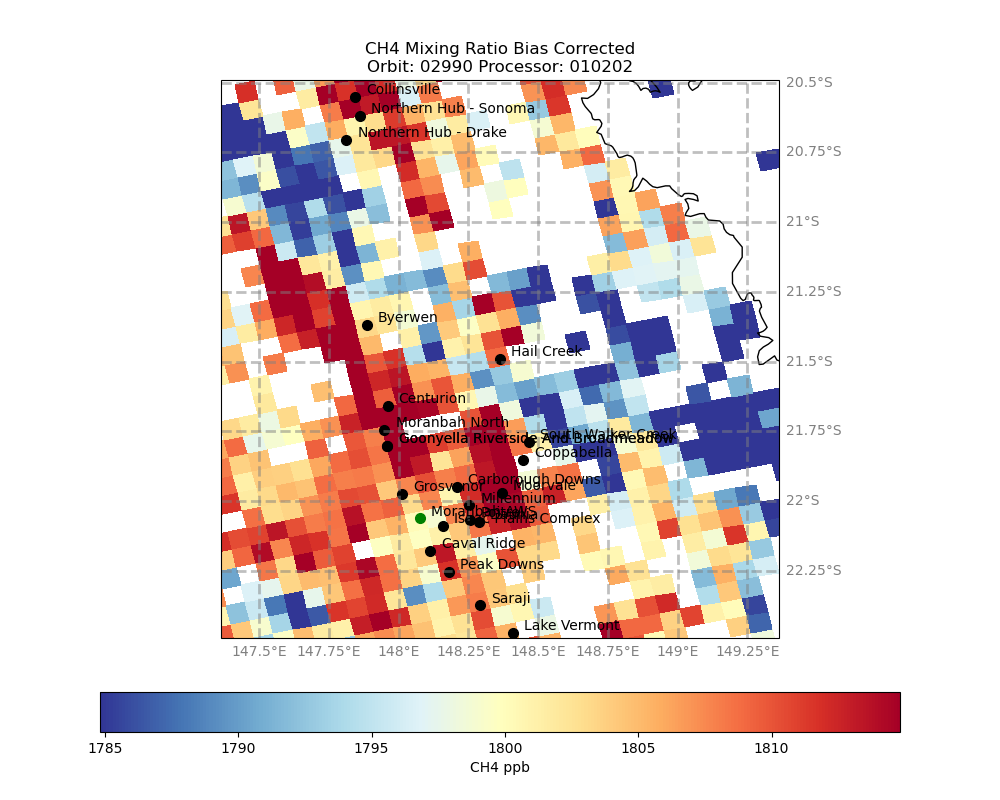
Figure 11. TROPOMI image centred at Hail Creek mine. Orbit 02990. Processor 01020.

The plume elements are shown in Figure 12. The background average of 1811.289 (ppb) exceeds most of the emissions within the upwind box. Consequently, the box-model derived emission rate of 1.12 (thour) is unrealistically low.
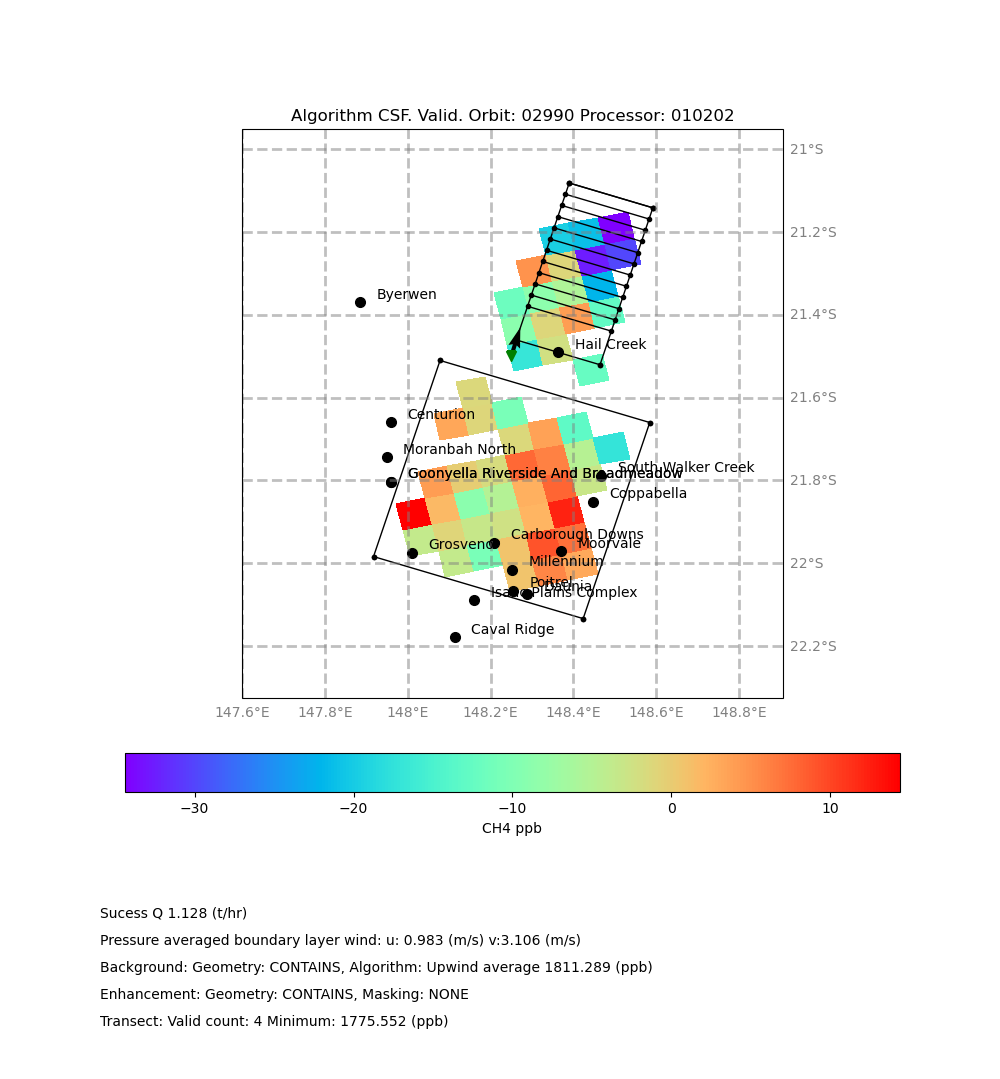
Figure 12. CSF. Background box contains emissions from other sources. TROPOMI. Orbit 02990. Processor 010200.

Large zenith angle

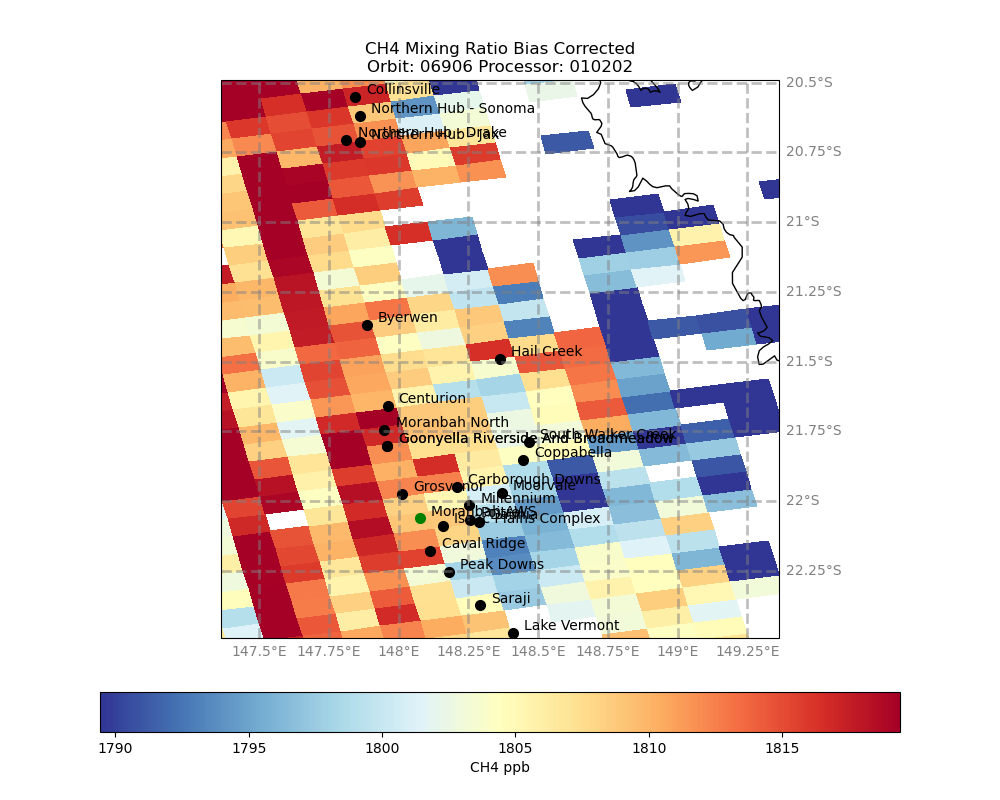
Inspection of the TROPOMI image for orbit 06906 shows pronounced striping and a large viewing zenith angle of 50° at Hail Creek (see Figure 13). This results in larger pixel footprints, and consequently the downwind box contains only a limited number of pixels available for transect calculations.

Figure 13. TROPOMI image centred at Hail Creek mine. Orbit 06906. Processor 010202.

Due to the large pixel footprint, the upwind box contains only 15 pixels. Although none are missing, the background value computed as the upwind-box average is rejected. Consequently, the domain median of 1808.265 (ppb) is used instead (see Figure 14).
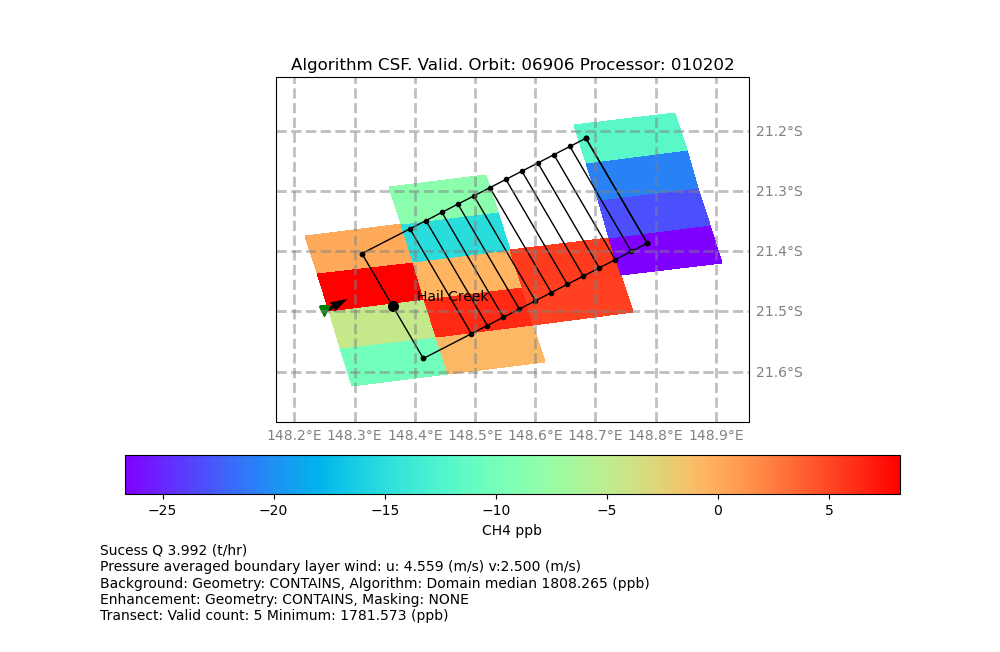
Figure 14. CSF. Valid pixels. TROPOMI. Orbit 06906. Processor 010202.

The calculation of emission rates relies on averaging across multiple transects, which themselves integrate over pixels exhibiting positive enhancement. Confidence in these estimates depends on having a sufficient number of contributing pixels. In this case, the plume shape identified by the CSF algorithm (Figure 15) contains only 5 pixels above background.
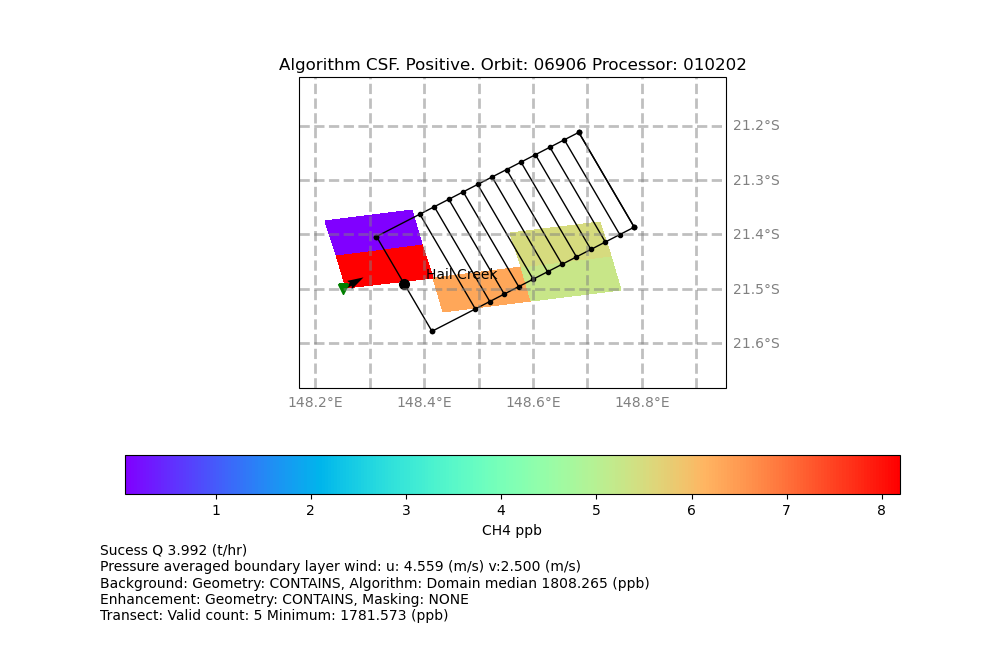
Figure 15. CSF. Positive pixels. TROPOMI Orbit 06906.Processor 010202.

Downwind interaction with other sources

The case of TROPOMI orbit 11020 illustrates that plumes can interact with one another. Examination of the box centred on Hail Creek for this orbit shows pronounced striping in the image (Figure 16). This striping likely contributes to the unusually broad plume identified by the CSF algorithm.
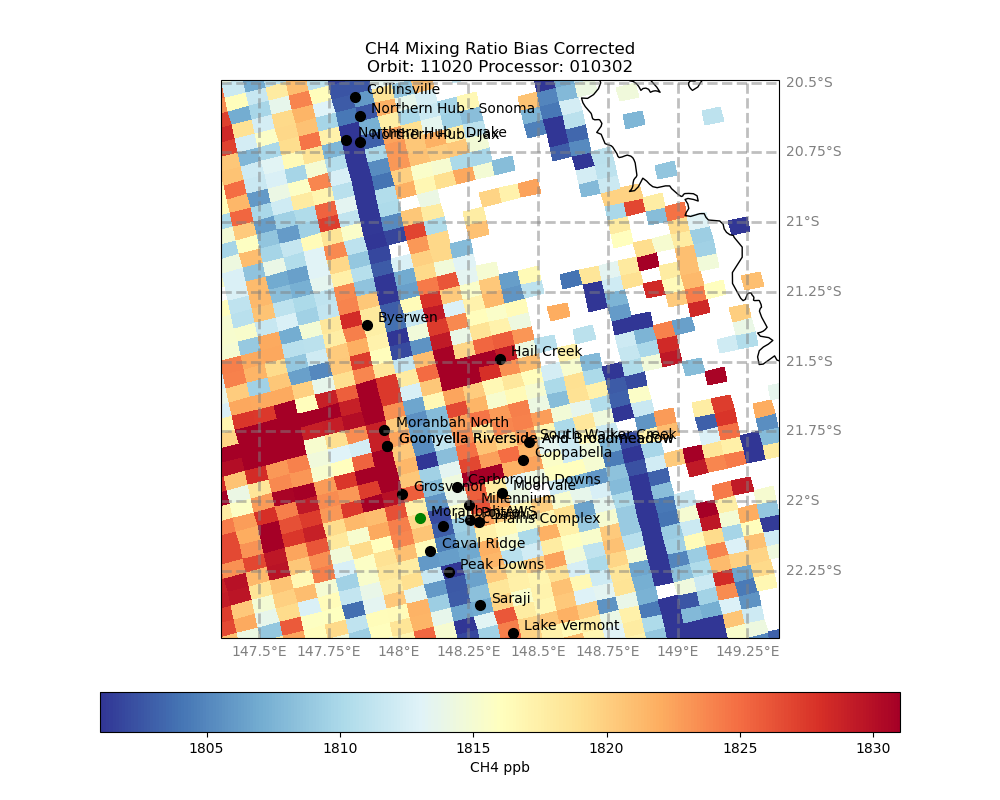
Figure 16. TROPOMI image centred at HailCreek mine. Orbit 11020. Processor 010302.

The algorithm reports a successful retrieval with an emission rate of 86 (thour), and the valid CSF elements are shown in Figure 17. It is evident that the transects intersect plumes originating from the Byerwen, Moranbah North, and Goonyella Riverside mines.
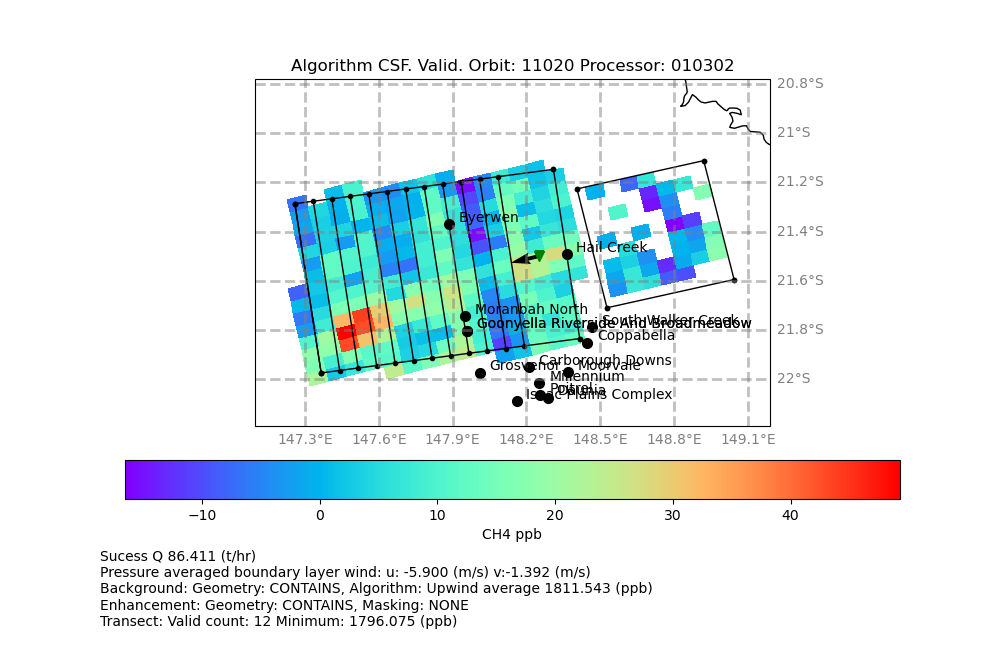
Figure 17. CSF. Valid pixels. Downwind box contains emissions from other sources. TROPOMI. Orbit 11020.Processor 010302.

© 2026 Copyright EC&V Pty Ltd
ABN 23 114 756 688
Last Updated: